About
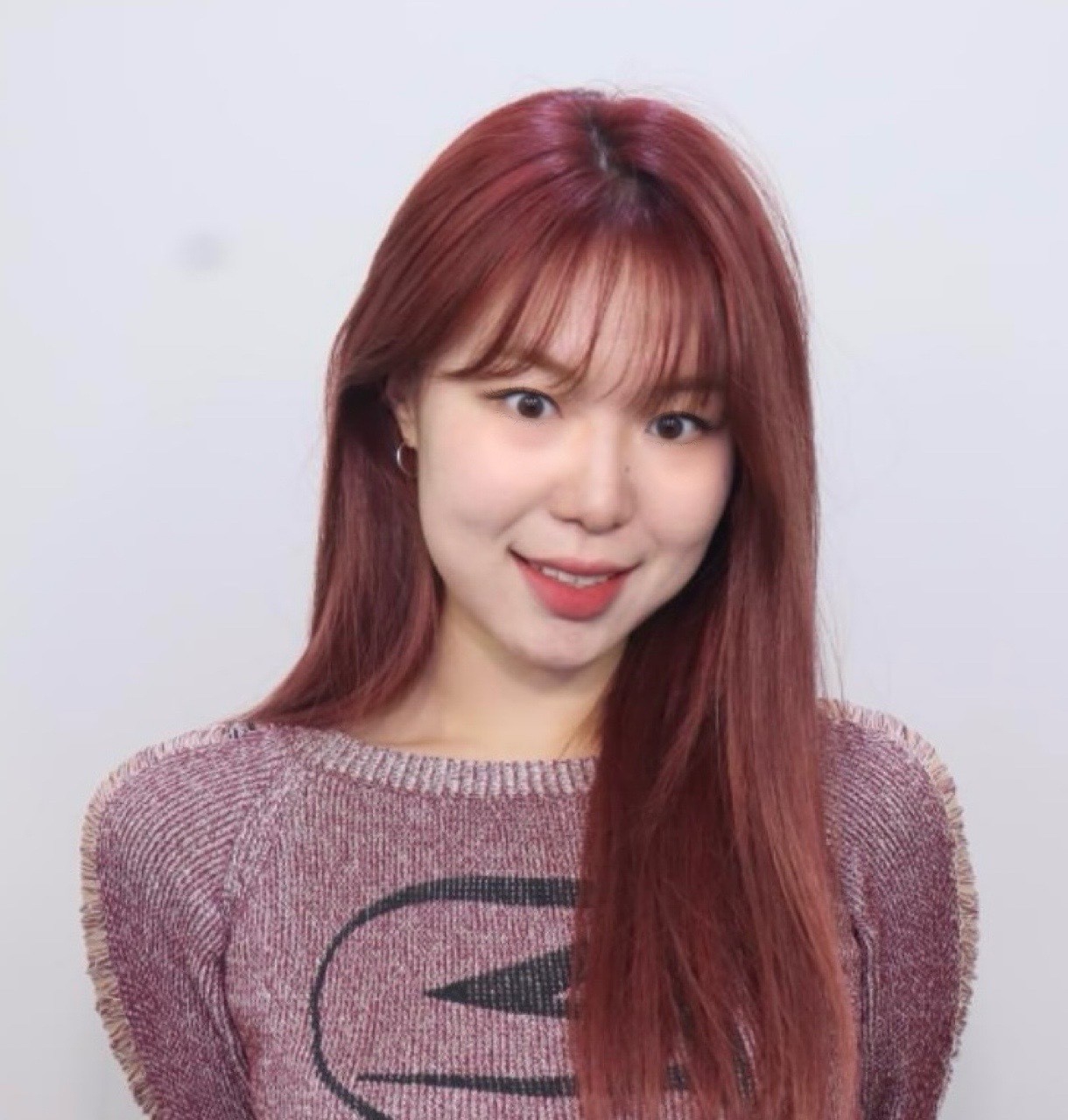
I am a Ph.D. candidate in the Department of Applied Artificial Intelligence at Hanyang University. My research interests lie at the intersection of Human-Computer Interaction (HCI), Human-Centered AI, haptics, and multimodal interaction.
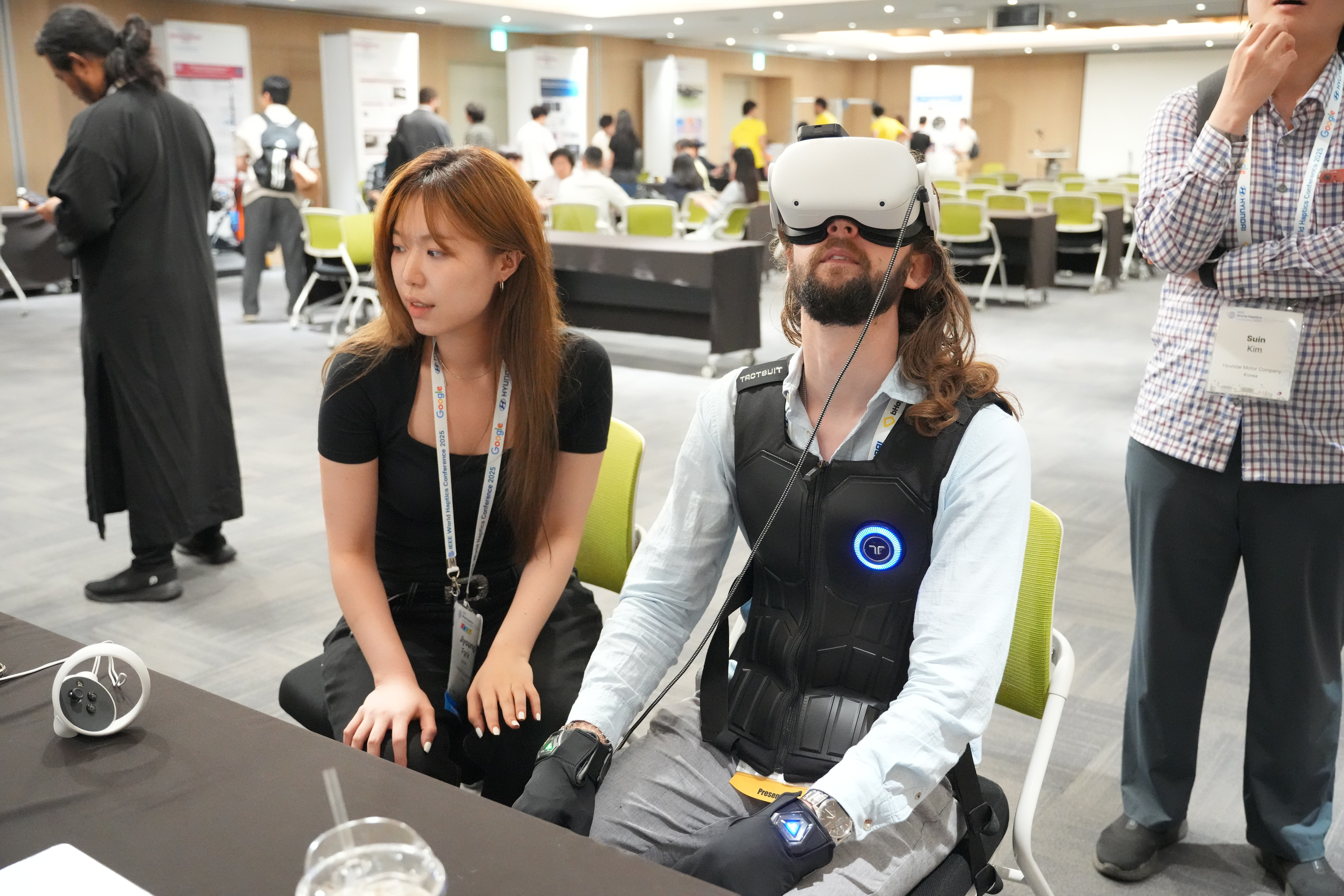
My work focuses on designing and evaluating interactive systems that integrate AI with haptic, tactile, and auditory feedback. I have explored AI-driven haptic assistance for sensorimotor skill learning, as well as multimodal accessibility systems that support blind and low-vision users in accessing and interacting with visual information, including charts, presentations, and programming environments.
I am also interested in adaptive multimodal feedback, human perception, and how emerging interactive technologies can enhance everyday interactions and experiences.
Latest News
Received the Best Demo Award (1st Prize) at Korea Haptics Conference 2026.
Our papers on AI-driven adaptive haptic assistance and TaME4D have been accepted to ACM TiiS and ACM Multimedia 2026, respectively!
Our paper “Amplifying Force-feedback Cues for Enhancing Dexterous Skill Transfer” was accepted to ICRA 2026!
You can also find me here!
Publications
2026
Towards An Optimal Strategy for Haptic Dexterous Skill Learning: Development of AI-Driven Adaptive Assistance
Towards An Optimal Strategy for Haptic Dexterous Skill Learning: Development of AI-Driven Adaptive Assistance
TaME4D: Tailoring Multisensory Effects for Improving 4D Movie Watching Experiences
TaME4D: Tailoring Multisensory Effects for Improving 4D Movie Watching Experiences
Amplifying Force-feedback Cues for Enhancing Dexterous Skill Transfer
Amplifying Force-feedback Cues for Enhancing Dexterous Skill Transfer
An On-Device AI-Based Visual-to-Tactile Translation System for Accessible Presentation Slides
An On-Device AI-Based Visual-to-Tactile Translation System for Accessible Presentation Slides
Development and Initial Evaluation on Accessible Block-based Programming Support System Based on Tactile Display
Development and Initial Evaluation on Accessible Block-based Programming Support System Based on Tactile Display
AI-Based Real-Time Audio–Tactile Chart Accessibility System for The Visually Impaired
AI-Based Real-Time Audio–Tactile Chart Accessibility System for The Visually Impaired
2025
Do Vibrotactile-Rendered Virtual Walking Sensations Reduce VR Cybersickness?
Do Vibrotactile-Rendered Virtual Walking Sensations Reduce VR Cybersickness?
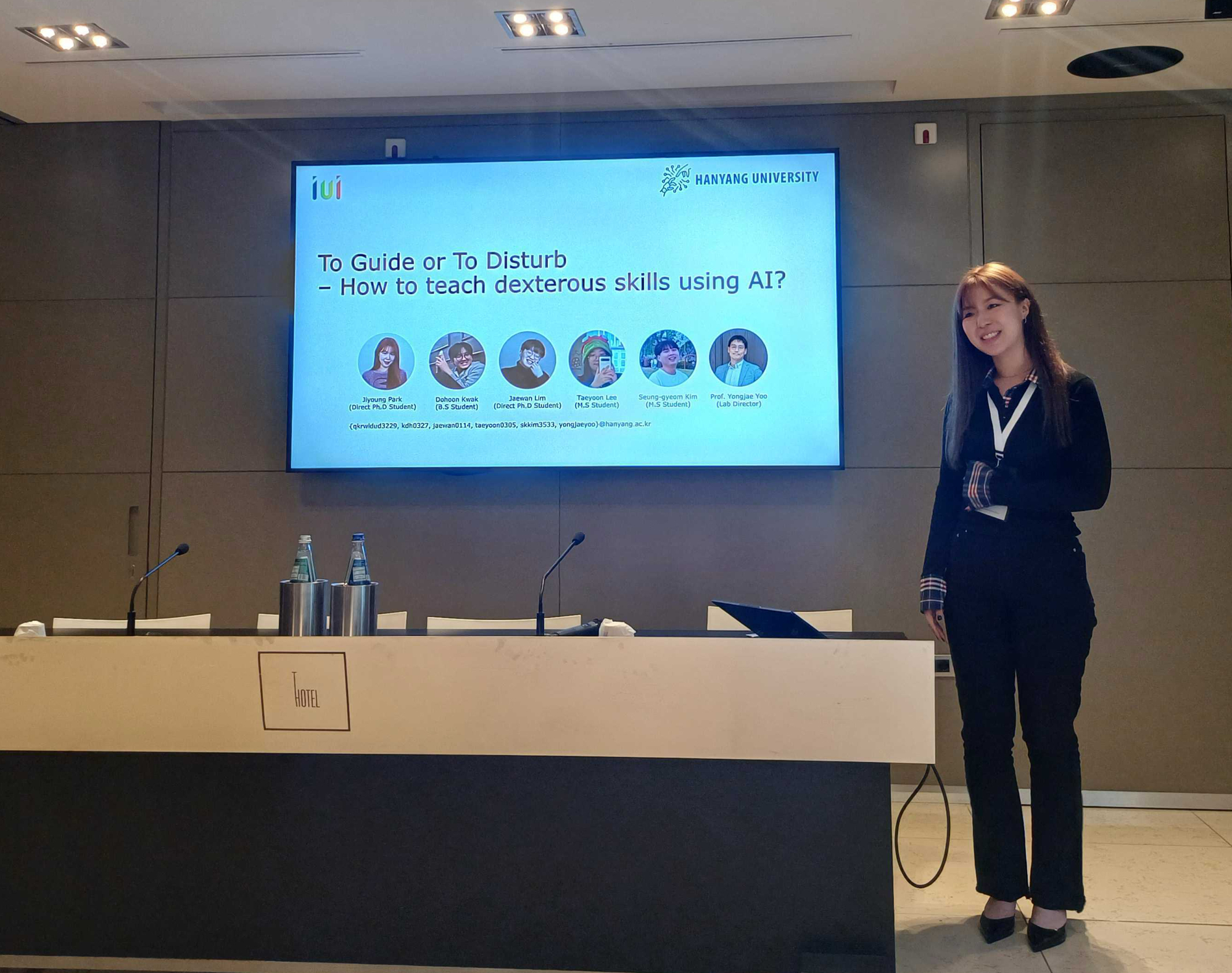
To Guide or To Disturb - How To Teach Dexterous Skills Using AI?
To Guide or To Disturb - How To Teach Dexterous Skills Using AI?
Audiovisual Feature Extraction for Multimodal Haptic Rendering in 4D Films Based on User Preferences
Audiovisual Feature Extraction for Multimodal Haptic Rendering in 4D Films Based on User Preferences
Design of a Four-Directional Wind Feedback System Using Video-Based Object Tracking
Design of a Four-Directional Wind Feedback System Using Video-Based Object Tracking
2024
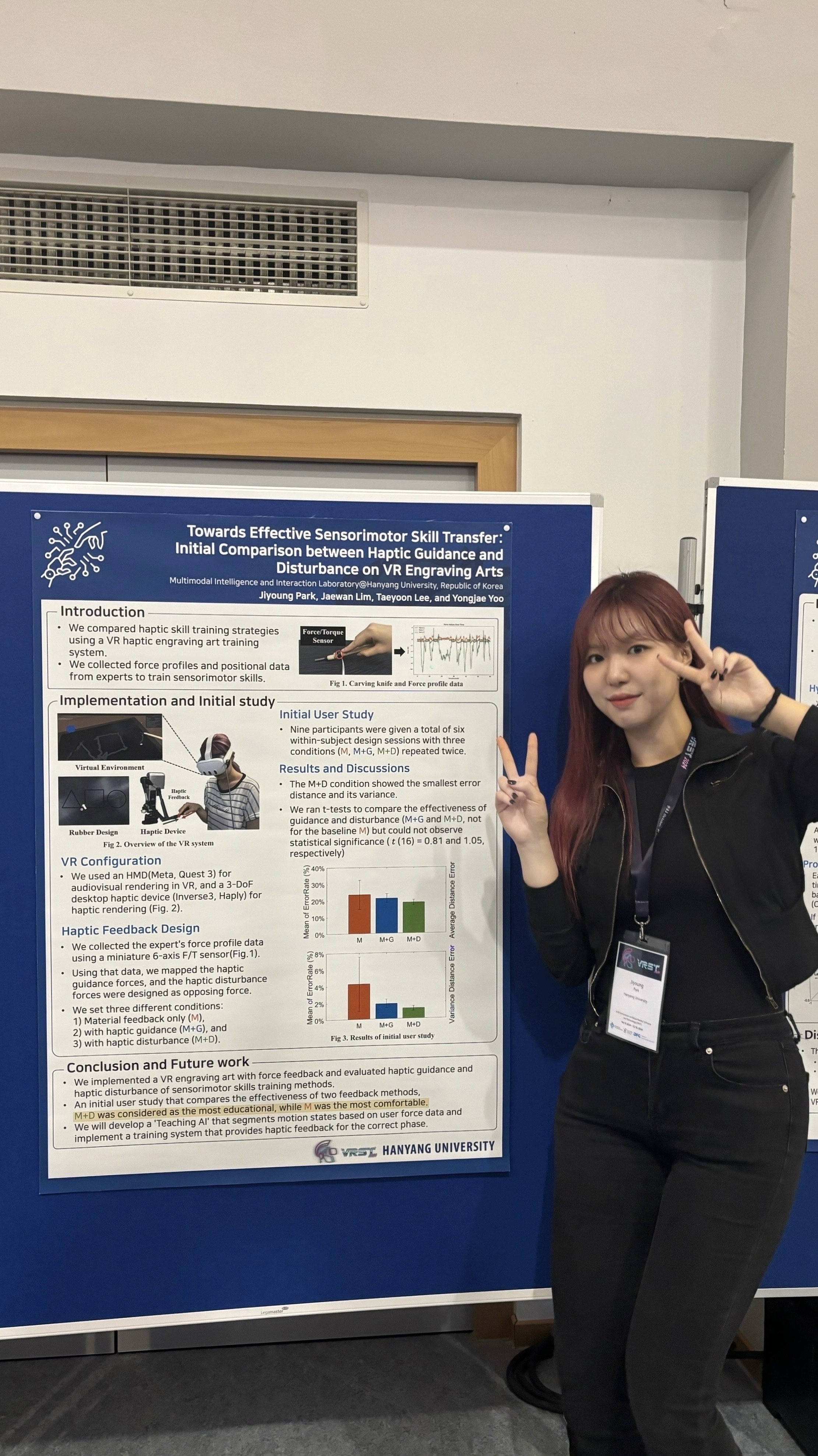
Towards Effective Sensorimotor Skill Transfer in VR Engraving Arts
Towards Effective Sensorimotor Skill Transfer in VR Engraving Arts
A Comparison between Vibrotactile Error-Correction Feedback on Upper and Lower Body in the VR Snowboard Balancing Task
A Comparison between Vibrotactile Error-Correction Feedback on Upper and Lower Body in the VR Snowboard Balancing Task
Segmentation and Learning of Carving Knife’s Force-Position Data in Engraving Arts for Guidance Force-feedback Rendering
Segmentation and Learning of Carving Knife’s Force-Position Data in Engraving Arts for Guidance Force-feedback Rendering
VR Balance Enhancement System Using Real-time CoP-based Haptic Feedback
VR Balance Enhancement System Using Real-time CoP-based Haptic Feedback
2023
A Preliminary Study for Data Capturing and VR System to Model and Transfer Dexterous Skills for Sculpture Arts
A Preliminary Study for Data Capturing and VR System to Model and Transfer Dexterous Skills for Sculpture Arts
Projects
Ongoing and past research projects.
Sensorimotor Skill Transfer
Visual-to-Tactile Translation for STEM
Spatial Access in Presentations
Personalized Multisensory 4D Experiences
Other Projects
MatchPoint: Haptic-Enhanced VR Sports Viewing
MatchPoint: Haptic-Enhanced VR Sports Viewing
VR-Based Haptic Simulation for Medical Training
VR-Based Haptic Simulation for Medical Training
Vibrotactile Feedback for Reducing VR Cybersickness
Vibrotactile Feedback for Reducing VR Cybersickness
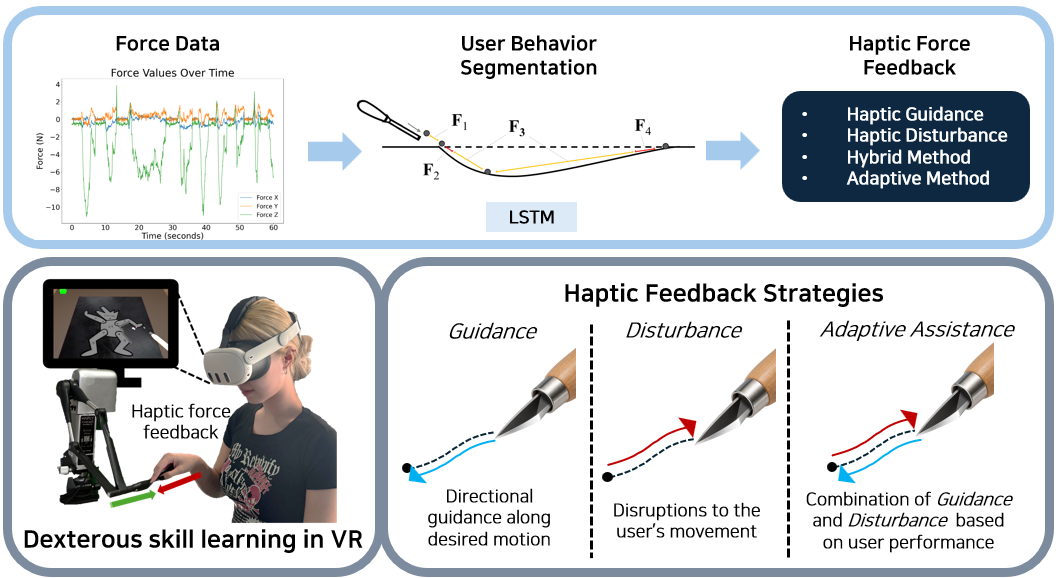
Sensorimotor Skill Transfer
Enhancing sensorimotor skill learning through AI-driven adaptive haptic feedback.
My research explores how haptic feedback can facilitate the acquisition and transfer of dexterous sensorimotor skills. Using VR-based training environments and force-feedback devices, I investigate how different feedback strategies influence motor performance, learning, and skill retention.
In particular, I develop AI-driven adaptive haptic assistance that adjusts feedback based on learners' performance and skill levels, aiming to balance direct guidance with opportunities for independent motor learning.
Related Publications
Towards An Optimal Strategy for Haptic Dexterous Skill Learning: Development of AI-Driven Adaptive Assistance ACM TiiS 2026 · Accepted Amplifying Force-feedback Cues for Enhancing Dexterous Skill Transfer IEEE ICRA 2026 Towards Effective Sensorimotor Skill Transfer in VR Engraving Arts ACM VRST 2024 A Comparison between Vibrotactile Error-Correction Feedback on Upper and Lower Body in the VR Snowboard Balancing Task ACM VRST 2024 To Guide or To Disturb - How To Teach Dexterous Skills Using AI? ACM IUI 2025 VR Balance Enhancement System Using Real-time CoP-based Haptic Feedback KCC 2024 Segmentation and Learning of Carving Knife’s Force-Position Data in Engraving Arts for Guidance Force-feedback Rendering KCC 2024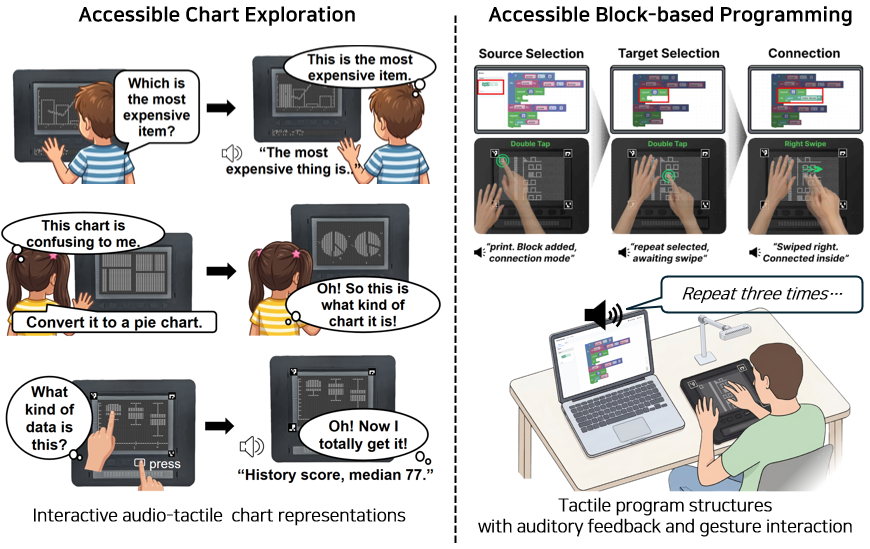
Visual-to-Tactile Translation for STEM
Making visual and spatial information accessible through AI-powered tactile and multimodal interfaces.
I develop AI-powered multimodal accessibility systems that enable blind and low-vision users to explore and interact with visually represented information, including charts, diagrams, and block-based programming environments.
My work combines AI-based content understanding, refreshable tactile displays, braille, and audio feedback to provide interactive, nonvisual representations. Beyond converting visual content into tactile graphics, I investigate how users can independently navigate, interpret, and manipulate complex information through multimodal interaction.
Related Publications
AI-Based Real-Time Audio–Tactile Chart Accessibility System for The Visually Impaired HCI Korea 2026 Development and Initial Evaluation on Accessible Block-based Programming Support System Based on Tactile Display KCC 2026Additional papers currently under review.
Spatial Access in Presentations
Making presentation slides accessible through on-device AI and interactive tactile displays.
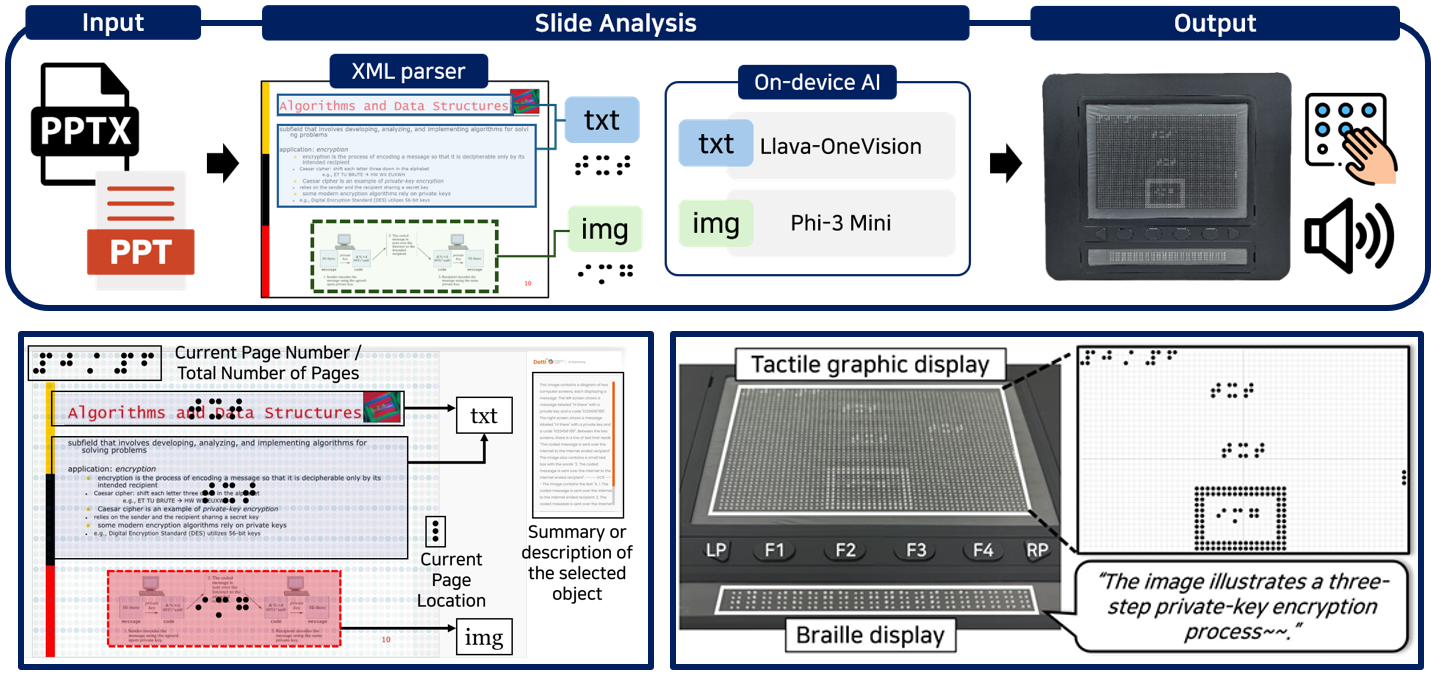
Presentation slides convey information through spatial arrangements, grouping, and visual hierarchy, which are often difficult for blind and low-vision users to access through conventional screen readers.
In collaboration with Microsoft and Dot Inc., we developed DotVista, an on-device AI-powered accessibility application that transforms presentation slides into interactive tactile representations. Leveraging Microsoft's Windows ML and Windows AI APIs, DotVista analyzes slide content and spatial layouts, providing tactile graphics, braille, and audio descriptions through Dot's refreshable tactile display.
DotVista was showcased at Microsoft Build 2025 and is available on the Microsoft Store. Building on this work, I am exploring shared tactile workspaces to support spatial referencing and collaboration between blind and sighted users.
Related Publications
Media & Links
Personalized Multisensory 4D Experiences
Generating personalized multisensory effects for immersive audiovisual experiences using AI.
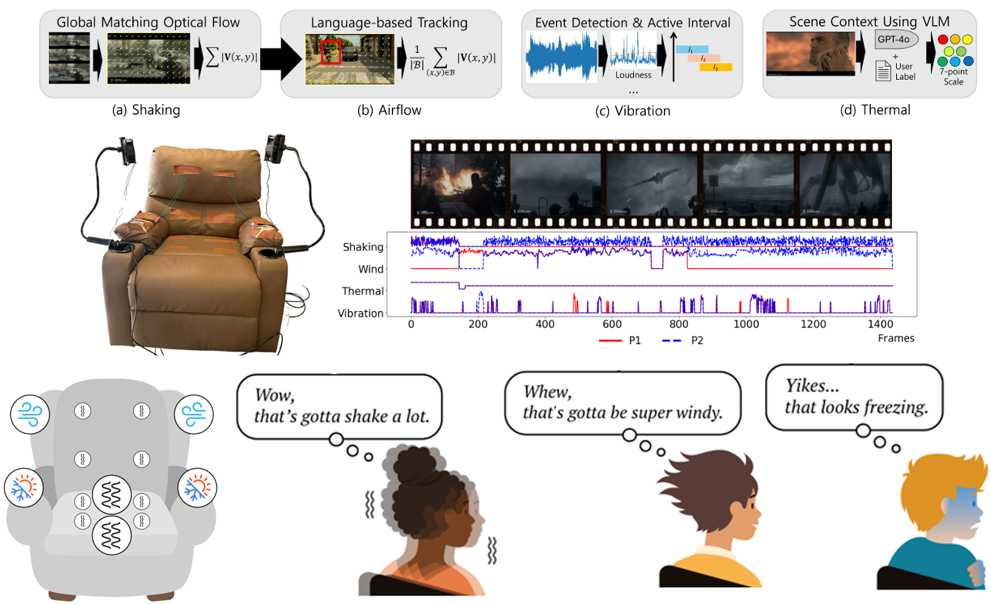
I explore how AI can enhance audiovisual experiences by generating multisensory effects tailored to individual preferences. Traditional 4D experiences typically rely on predefined effects, offering limited flexibility in adapting to different viewers and their sensory preferences.
To address this limitation, we developed TaME4D, an AI-based system that analyzes audiovisual content and generates personalized 4D effects, including vibration, motion, airflow, and thermal feedback. By combining multimodal scene understanding with natural language descriptions of user preferences, the system automatically identifies relevant scenes and adapts sensory effects to create more immersive and personalized viewing experiences.
Related Publications
Get in touch
Let’s talk.
I’m always happy to connect.
Whether it’s about research, collaboration, or just a conversation about HCI and haptics.
Multimodal Intelligence & Interaction Lab (MILab), Hanyang University